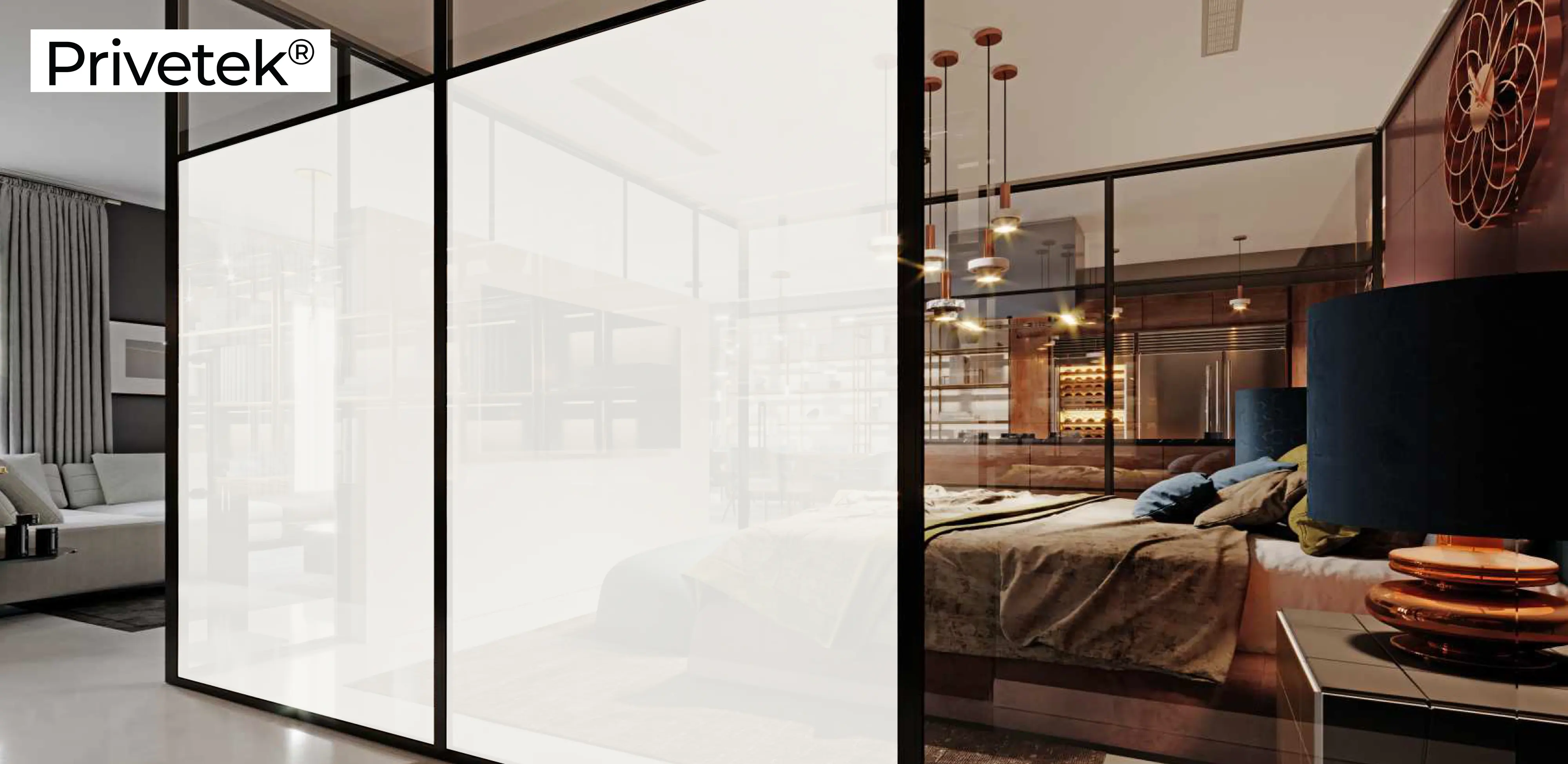

Prior to starting the installation of your Switchable Glass Film, you need to have the appropriate tools and materials available to install your switchable film quickly and correctly. The proper tools and materials will contribute to the overall success of the installation and extend the life of your Smart Film.
Before You Begin – What You’ll Need
- Switchable Glass Film material, already pre-cut to the dimensions you desire
- A spray bottle filled with soapy water
- Squeegee
- Microfiber cloth
- Utility Knife
- Power Supply Unit and connectors
- Electrical Tape
- Remote Module or Control Switch
Safety and Preparation Tips
- Turn off the power around the electrical system, so you are not at risk of being electrocuted.
- Clean the glass completely of all dirt and oils, which can produce bubbles when applying the film.
- A clean, dry and dust-free area will enhance the bonding between the film and the surface.
- Verify and check again that the film was properly cut to size and is in the correct position with the bus bar in place on the glass and the film before beginning the installation of the film.
Step-by-Step Installation Process of Switchable Glass Film
Step 1 - Clean and Prepare the Glass Surface
Thoroughly clean the glass with a mild glass cleaner and a microfiber cloth to remove dirt, grime and oils from the glass.
Wait for the glass to be completely dry before you apply the film.
Note: Do not use paper towels to clean the glass because paper towels normally have lint or oils that will interfere with the adhesive being able to properly attach itself to the glass.
Step 2 - Position and Align the Film
Lay the film out flat on a clean surface.
Identify the bus bar, the thin metal strip at the top of the film that contains the connector for attaching the power supply.
Position the film on the glass according to your plan. Make sure the bus bar is as close as possible to where you plan to attach the wiring.
Step 3 - Apply the Film
- 1. Spray the glass lightly with the soapy water from the spray bottle.
- 2. Slowly and carefully pull the backing off the adhesive side of the film.
- 3. Put the film on the glass, start at one end.
- 4. Use the squeegee to get rid of air bubbles and extra water from the middle of the film towards the ends.
- 5. Repeat the process until the film lies flat and evenly.
The soap allows you to gently move the film back and forth slightly while the adhesive is still sticky, allowing you to put the film exactly where you want it.
Step 4 - Connect the Electrical Components
- 1. Identify the wires attached to the bus bar.
- 2. Attach these wires to the power supply unit (usually 48V DC, depending on the type of film you purchased).
- 3. Secure the two wires together with electrical tape to prevent short circuits.
- 4. Find a convenient location for your control switch or remote module near the film for easy access.
Refer to the manufacturer’s wiring diagram to identify the proper wiring configuration for your film. Using the wrong voltage or reversing the polarity of the wiring could damage your film and affect how well it works.
Step 5 - Test the Film
Switch the power source on and test the film to make sure it changes between “clear” (on) and “opaque” (off) smoothly.
If your film does not switch modes smoothly, flickers, or has areas that do not operate, turn the power off and examine your wiring.
Possible causes for these issues include loose wiring, high humidity or poor adhesion.
Step 6 - Finishing Touches
After testing your film:
- Remove the excess film from the edges of the glass using a utility knife for a neat finish.
- Enclose the wiring and connectors with trim or moulding to hide them from sight.
- Let the adhesive cure for 24 hours before placing any weight or stress on the glass (i.e. open/close doors or windows) to let the adhesive properly adhere to the glass.
Common Installation Mistakes to Avoid
Minor mistakes can reduce the effectiveness of your smart film. Some of the common mistakes people make:
- Installing the film in a wet/damp environment and/or failure to seal the edges of the film to protect against moisture.
- Failure to align the bus bar properly during application.
- Failure to cut the film to the correct size and creating an edge seal that could ultimately lead to moisture damage.
- Failure to apply the correct voltage or failure to insulate the wires.
- Testing the film before completing the film installation and sealing the edges.
Having patience during the installation process will produce a functioning switchable glass film for years to come.
DIY vs. Professional Installation
While switchable glass film are great DIY projects, there are some installations that are not suitable for DIY.
When DIY Works Best
- Small windows or panels that can be easily worked with by hand and have simple wiring requirements.
- Simple connection of the power supply.
- No integration into a smart home or automation system.
When to Hire Professionals
- Large panes of glass are being installed.
- More than one pane of glass is being installed.
- Longer wiring runs are needed for commercial properties.
| Approach | Pros | Cons |
|---|---|---|
| DIY Installation | Cost-saving, flexible timing, personal control | Risk of air bubbles, wiring errors, shorter lifespan if mishandled |
| Professional Installation | Flawless finish, warranty-backed, expert wiring | Slightly higher upfront cost |
Post-Installation Care and Maintenance
By maintaining your film, it will continue to perform flawlessly for many years.
- Do not clean the film for 24 hours after the installation.
- Only use mild cleaners and soft microfiber cloths.
- Do not use sharp objects to clean the film, and do not press too hard on the film edges.
- Periodically inspect the wiring connections and voltage levels.
Using soft cleaning methods will keep your film looking new and ensure smooth operation.
Troubleshooting Tips
Film doesn’t switch ON/OFF:
Confirm that all electrical connections are secure; check for proper voltage supply.
Partial opacity or uneven switching:
Most likely caused by an irregular voltage supply or a faulty wire connection.
Air bubbles after drying:
Carefully use a squeegee to apply even pressure to the air pockets in the film, or very gently puncture the air pockets using a needle.
Flickering or noise:
May indicate moisture entry into the film or damaged wires, thus disconnect power to the film, inspect the insulation.
Conclusion
Installation of switchable glass film can be done much more easily than one would expect, using some care in detail and deliberation on every step from the glass cleaning to the wiring of the electric connections. Each of these steps will assist in creating a seamless transition and provide an immediate, cost-effective and high-tech smart glass solution to achieve increased energy efficiency, and enhanced privacy in addition to the many smart design features of the film.
Regardless of whether you are looking to upgrade your home, business, or retail space, smart film provides a modern look to any ordinary piece of glass.
Need to have an expertly installed switchable glass film? Call Privetek now for a certified professional switchable glass film installation or schedule a no-charge consultation with our staff to discuss how Privetek can help you get started with a smart film project.
FAQs about Installing Switchable Glass Film
1. Can switchable glass film be installed on existing glass windows?
2. Is it safe for bathroom or outdoor use?
3. What’s the average installation time?
4. Can one switchable glass film connect to multiple panels?
5. What’s the lifespan after installation?
Related Blogs