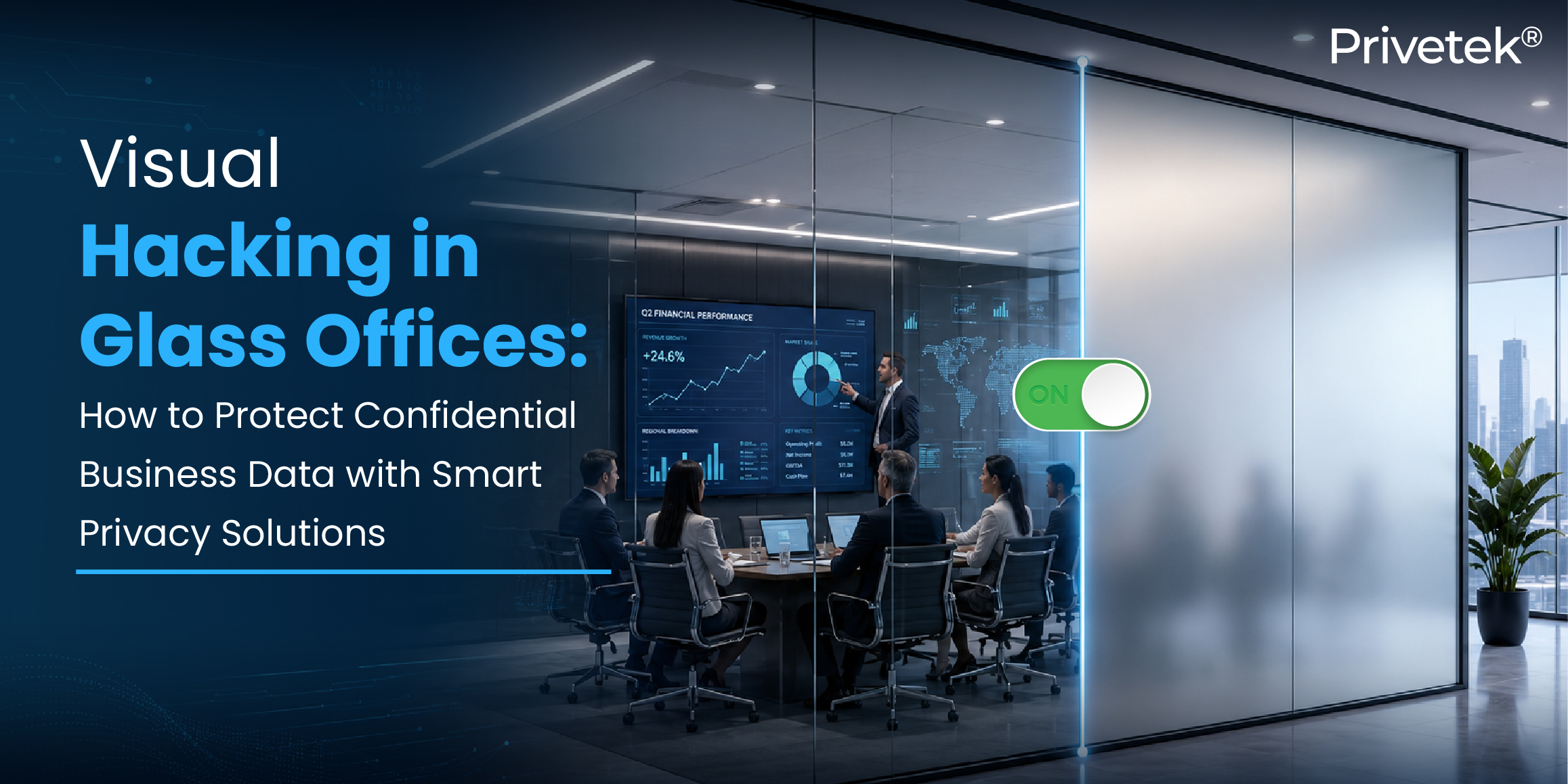

Smart privacy technology has become a staple of many luxury residential, office-commercial, health-care, hospitality, and high-end retail environments throughout modern architecture.
However, one fundamental design specification error consistently appears in all new construction and development projects: specifying switchable film as opposed to specifying switchable glass for privacy.
Although both types of technology can provide on-demand privacy functionality, they differ greatly in terms of engineering, lifespan, maintenance needs, and suitability within an architectural space.
The architect's selection process for privacy solutions extends beyond just providing privacy. The architect's primary concerns include: long-term performance and durability of the product selected by them, cost associated with maintaining the products selected by them, aesthetic appearance of the selected products, and ensuring long-term customer satisfaction.
The Growing Demand for Switchable Glass
Smart privacy solutions are fast becoming an integral part of designing flexible, open yet private spaces in today's world. The need for smart privacy solutions exists in a variety of areas, including:
- Boardrooms
- Healthcare cabins
- Luxury residences
- Hospitality suites
- Retail storefronts
Today's clients anticipate spaces which have an appearance of being contemporary, integrated and technologically sophisticated. However, the specification of the appropriate privacy solution at the design phase is also significant. Architects are doing far more than simply selecting a product; they are defining:
- Long-term operational reliability
- Maintenance realities
- Visual quality over time
- Client experience years after installation
Specifying the wrong privacy system will lead to costly, unnecessary maintenance issues, replacement costs, and operational disruptions down the line.
Understanding the Difference: Switchable Glass vs. Switchable Film
Although both technologies create instant privacy, they are engineered very differently.
What is Switchable Film?
Switchable film can be attached directly on top of glass surfaces which are already installed. Therefore, the primary use of this type of switchable film is for retrofit applications because changing out the existing glass may be too expensive or too difficult to accomplish.
When electrical power is applied, the film will change from being see-through (clear) to being non-transparent (opaque).
Best Use Cases for Switchable Film
- Existing buildings
- Renovation projects
- Temporary upgrades
- Budget-sensitive retrofits
Important Clarification
Switchable films serve an important purpose in the industry but were not intended to be used instead of switchable glass in premium new construction.
Also Read: Switchable Film: Types, Benefits & Applications
What is Switchable Glass?
The switchable glass product contains the privacy technology embedded into it as part of the glass itself. It has been developed through controlled manufacturing systems utilizing precision applications along with architectural grade glazing specifications.
Unlike switchable film which can be installed on existing windows (retrofit), switchable glass is a built-in architectural product that will provide both structural and visual durability over time.
Best Use Cases for Switchable Glass
- New commercial developments
- Luxury interiors
- Corporate headquarters
- Healthcare environments
- High-end residential spaces
Key Difference
Unlike other products that are add-ons, the switchable glass becomes part of the architectural glazing system itself.
Also Read: What is Switchable Glass & How Does It Work
Why Are Switchable Films Being Suggested in New Projects?
Manufacturing switchable glass that meets architectural standards can require substantial investment, such as:
- Clean-room facilities
- Specialized lamination machinery
- Advanced quality control systems
- Precision optical testing
While not all vendors are capable of manufacturing switchable glass to architectural specifications, many suggest using retrofit film as a less expensive option when they would prefer to specify switchable glass. In no way does this imply that retrofit film is a bad product. Retrofit film is simply designed to meet different needs than switchable glass. "Installation ease should never take precedence over long term architecture." When deciding what type of switchable film to use (or whether or not to use it) you need to consider how the film will function within the intended lifecycle and operational requirements of your project.
Warranty Tells the Real Story
Product satisfaction has many variables in determining a product's life cycle; one of them is warranty duration.
| Feature | Switchable Film | Switchable Glass |
|---|---|---|
| Typical Warranty | 1–2 Years | 5 Years |
| Application Type | Surface Applied | Integrated |
| Durability | Moderate | High |
| Maintenance Sensitivity | High | Low |
| Long-Term Suitability | Retrofit Projects | New Installations |
A manufacturer’s expectation of a product’s lifespan may be directly related to their offered warranty term.
Switchable films applied to surfaces have potential for exposure to:
- Edge damage
- Moisture ingress
- Cleaning chemicals
- Peeling risks
Switchable glass creates a barrier around sensitive technology, allowing it to operate safely behind two panes of glass. The switchable glass structure improves the product's overall life expectancy by making the film less susceptible to damage from chemicals or moisture.
Should Architects Specify Products Based on Ease of Replacement?
An often-cited advantage of using retrofit film by architects is that it has the ability to be quickly and easily replaced. However, this creates an important architectural issue: Should high-performance materials be chosen because of their ease of failure and replacement? Products that are engineered with the intention of being replaced inherently accept that there will be a greater likelihood of problems occurring in the future. Architects are tasked with designing permanent spaces, not short-term test sites. Luxury and commercial clients expect to invest in long-lasting and dependable solutions which maintain both functionality and aesthetics over time. The cost of replacing a failed product involves much more than simply the cost of replacing the material.
It includes:
- Operational downtime
- Labor costs
- Disruption to occupants
- Aesthetic inconsistencies
“The greatest architectural materials will be those that clients can stop thinking about entirely."
Should Architects Specify Products Based on Ease of Replacement?
Designed for Real Buildings – Not Controlled Demonstration Spaces
In real-world commercial environments, maintenance teams use standard cleaning procedures and chemicals every day.
This is where many retrofit film systems begin to face challenges.
Common Switchable Film Vulnerabilities
- Exposed film edges
- Sensitivity to moisture
- Surface scratches
- Delamination risks
- Damage from improper cleaning
Over time, repeated maintenance cycles can compromise both aesthetics and functionality.
How Privetek Switchable Glass Differs
Privetek switchable glass is engineered for high-traffic architectural environments.
Key advantages include:
- Hermetically sealed technology
- No exposed electronic layer
- Cleaning similar to standard glass
- Better durability in commercial spaces
The result is a cleaner, more robust, and lower-maintenance solution for long-term architectural use.
Why Manufacturing Infrastructure Matters
The quality of switchable glass is directly connected to manufacturing capability.
Architectural-grade switchable glass requires:
- Clean-room manufacturing
- Precision lamination processes
- Optical clarity control
- Structural integrity testing
- Consistency across large-format panels
Premium architectural materials require industrial precision, not just assembly.
This directly impacts:
- Visual consistency
- Edge quality
- Longevity
- Reliability
- Overall project performance
For architects, manufacturing standards matter just as much as the final appearance.
When Should You Specify Switchable Film vs. Switchable Glass?
The right technology depends on the right application.
| Project Scenario | Recommended Solution |
|---|---|
| Existing building retrofit | Switchable Film |
| Glass cannot be replaced | Switchable Film |
| Luxury new build | Switchable Glass |
| Corporate headquarters | Switchable Glass |
| Hospitality premium suites | Switchable Glass |
| Long-term commercial lifecycle | Switchable Glass |
Switchable film remains valuable for retrofit scenarios where replacing glass is impractical. However, for premium new installations and long-term commercial applications, switchable glass offers superior lifecycle performance.
Designing for Year 10 – Not Just Day 1:
True architectural specifications go beyond how the space appears visually.
It considers:
- Lifecycle performance
- Maintenance realities
- Durability
- Operational efficiency
- Long-term client satisfaction
As switchable film remains a practical and viable alternative to other solutions when considering retrofitting existing structures, switchable glass represents the standard for aesthetic appeal and long term reliability in high-end new construction projects.
Successful architectural projects are not solely based upon how attractive a project appears at initial completion but rather on its ability to perform as planned over many years.
Why Architects Choose Privetek
Privetek is a designer of commercially viable, architecturally developed switchable glass technologies that deliver long-term reliability in high-end commercial and luxury settings.
Privetek has been selected by architects due to:
- Long-term dependability
- Premium optical quality
- Architectural grade engineering design
- Privetek's experience in delivering solutions for both commercial and luxury projects
- Smart privacy solutions that perform well in real world applications.
Switchable glass solutions from Privetek provide long-term reliability, precision, and elegance for all types of contemporary architecture, including health care facilities, corporate offices, and luxury residences and hotels.
Related Blogs